

Compression boots for runners have become a familiar sight, from elite training camps to local running clubs. After a long run or a hard interval session, slipping into a pair of air compression boots is one of the most relaxing ways to look after your legs.
Here are six essential tips on using compression boots for runners: when to use them, how long sessions should be, and how they fit into a training week.
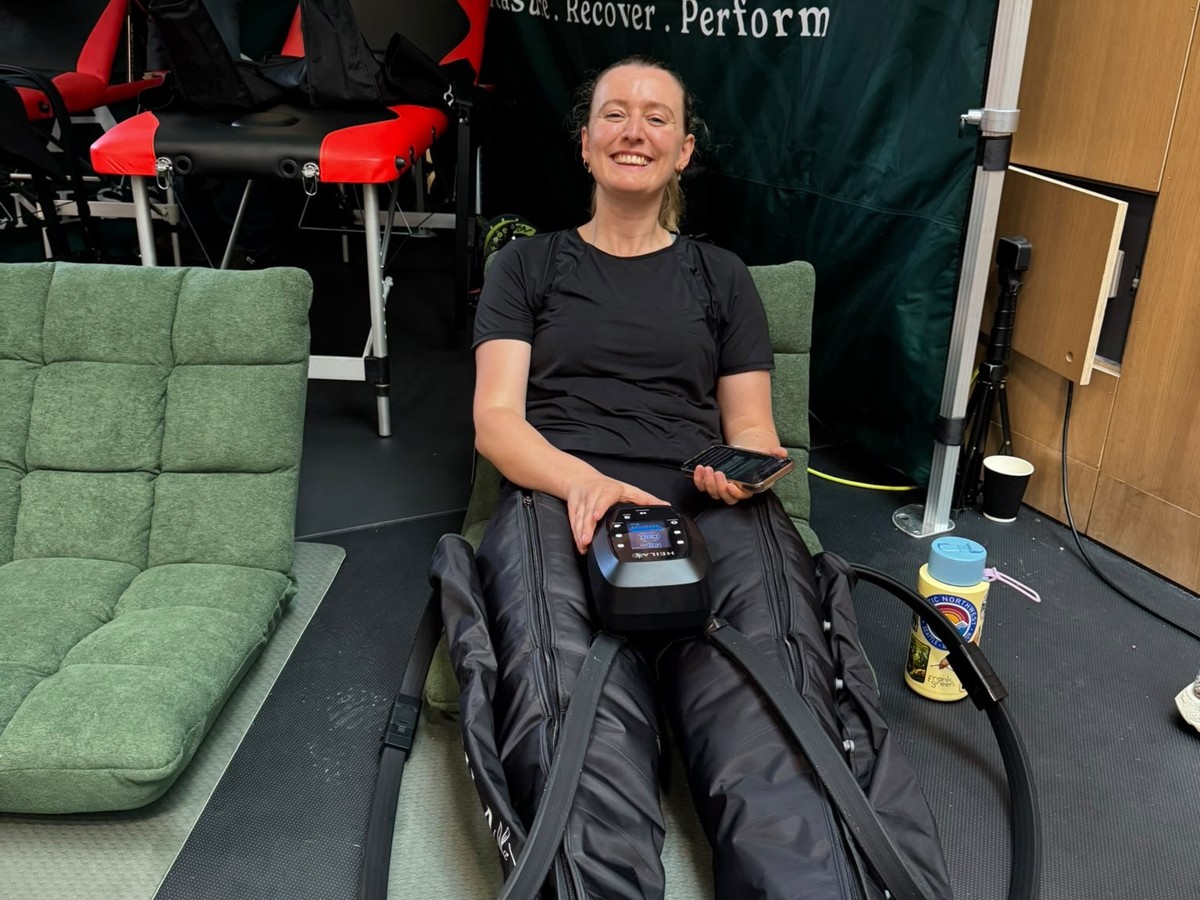
What are compression boots?
Compression boots are air-powered sleeves that cover your legs from feet to hips. Chambers inside inflate in sequence, starting at the feet and moving upwards, then release. Most people describe it as a firm, rhythmic leg massage. Athletes use them to help legs feel lighter and fresher, and they support circulation while you rest.
For a deeper look, see our compression therapy page.
Why compression boots for runners are so popular
Running is repetitive. Thousands of strides load the same muscles again and again, and tired, heavy legs are part of the deal during big training blocks. Compression boots for runners appeal because they’re:
- Easy, you just lie back and relax
- Quick, a session takes 20 to 30 minutes
- Mess-free, no changing, no water, no ice
- Easy to use at home, in front of the TV or with a book
Tip 1: Use them after long runs and hard sessions
The best time to use compression boots for runners is after the sessions that leave your legs tired: long runs, intervals, hill sessions and races. A session the same evening is a great way to wind down.
Tip 2: Keep sessions to 20 to 30 minutes
You don’t need hours in the boots. Most runners find 20 to 30 minutes is plenty. Start on a lower pressure and build up to a firmer setting if it feels comfortable.
Tip 3: Use them on rest days too
Rest days are a great time for a relaxed session, especially during heavy training weeks. It turns rest into active recovery without adding any load.
Tip 4: Combine them with the basics
Compression boots for runners work best alongside the habits that matter most:
- Eat and drink well after long runs
- Prioritise seven to nine hours of sleep
- Keep easy runs genuinely easy
- Build up mileage gradually
The NHS exercise guidance is a useful reminder that consistent, sensible activity is the foundation of everything.
Tip 5: Plan around races
Many runners use compression boots in race week to keep legs feeling fresh, and again after the race as part of their recovery. Our guide to recovery after cycling shows how endurance athletes used boots between efforts at a six-hour event.
Tip 6: Know when to check with your GP
Compression isn’t suitable for everyone. Speak to your GP first if you have a history of blood clots, circulation problems, a heart condition, recent surgery, are pregnant, or have wounds or skin conditions on your legs.
A simple week of compression boots for runners
Here’s an example for someone running four times a week:
- Monday: rest day, relaxed 30-minute session
- Tuesday: intervals, 20-minute session in the evening
- Wednesday: easy run, no session needed
- Thursday: tempo run, 20-minute session
- Saturday: long run, 30-minute session later in the day
- Sunday: easy run or rest
Adjust it to your plan. The aim is a routine you enjoy and stick to.
Compression boots for runners and your club
Running clubs love a recovery night. We bring compression boots, ice baths and our team to clubs and events, as we did for 350+ riders at the Beard Cyclathon. Our guide to planning a sports team recovery day covers how to set one up.
Getting started with compression boots
If you’ve never used compression boots before, your first session is simple:
- Lie down comfortably with your legs flat or slightly raised
- Zip the boots up to the top of your thighs
- Start on a low pressure and build up gradually
- Relax for 20 minutes with a book, music or a podcast
- Get up slowly and have a glass of water
Most runners find the sensation strange for the first couple of minutes and then very relaxing. After a few sessions you’ll know which pressure and length suit you best.
Common mistakes runners make
- Cranking the pressure up too high on the first go
- Using boots instead of easy days rather than alongside them
- Only using them after races, not during training blocks
- Forgetting the basics of food, fluids and sleep
Key takeaways
- Use compression after long runs, hard sessions and on rest days
- Keep sessions to 20 to 30 minutes and start on a low pressure
- Combine compression with good sleep, food and easy days
- Plan sessions around races as well as training blocks
- Check with your GP first if you have circulation problems or a history of clots
Used consistently, compression becomes one of the most relaxing parts of a training week, and a simple way to look after your legs between runs.
Compression boots for runners FAQs
How often should runners use compression boots?
After hard sessions and on rest days is a common pattern, so two to four times a week during training blocks.
Can I use compression boots before a run?
Some runners use a short session the day before a race. Most prefer them after running.
Can I hire compression boots?
Yes. We offer compression boot hire from £145 a month, delivered with a full demonstration.
Try compression boots for runners
We offer compression sessions and hire across Oxfordshire, Buckinghamshire, Hertfordshire and Berkshire. Get in touch to try compression boots for runners or book a club recovery night.